That sour smell hits fast on a hot afternoon. You open the door, and suddenly the whole car feels dirty, even if the paint looks fine and the floor mats were vacuumed last week. A real car odor removal service is not a spray, not a tree hanging from the mirror, and definitely not a five-minute wipe-down. If the odor is baked into fabric, padding, vents, spills, or pet hair, it takes actual interior work to fix it.
That is where a lot of drivers get burned. They pay for a quick cleaning, get a strong fragrance for a day or two, and then the smell comes right back. That is not odor removal. That is odor cover-up. If you want the interior to smell clean instead of just perfumed, you need to deal with the source.
What a car odor removal service is really supposed to do
The job is simple to describe and harder to do. Find what is causing the odor, remove as much of that material as possible, then treat the affected areas so the smell does not keep rising back into the cabin. Sometimes that means shampoo and extraction. Sometimes it means heavy vacuuming, steam, stain treatment, vent cleaning, and a targeted deodorizing process. Sometimes it means telling the customer the truth: this car has a deeper issue, and no honest detailer should promise a perfect result.
Bad smells usually come from something physical left behind. Food spills soak into carpet. Milk reaches padding and turns brutal fast. Smoke residue sticks to fabric, plastic, and headliners. Wet dog smell settles into seats and cargo areas. Mold and mildew can start after water intrusion, clogged drains, or a leak around a door or sunroof. Even old coffee in a seat track can make a whole vehicle smell off.
That is why odor work is condition-based. Two cars can both smell bad and need very different labor. One may need a solid interior detail and focused treatment. The other may need much deeper work because the problem has been sitting for months.
Why car odors keep coming back
If an odor returns after cleaning, one of two things usually happened. Either the source was never fully removed, or the source is still being recreated.
The first one is common. A spill gets cleaned on the surface, but not in the padding underneath. Pet hair gets vacuumed from the carpet, but not from the seat rails, trunk trim, or fabric seams where odor sticks. Smoke gets wiped from hard surfaces, but the headliner and vents still hold residue.
The second issue matters just as much. If the car has a moisture problem, no deodorizer is going to solve it long term. Wet carpet, a leaking windshield seal, trunk water intrusion, or a clogged AC drain can keep producing that mildew smell no matter how many products get used. In those cases, the odor is a symptom. Fixing the smell means fixing the cause.
The most common odor sources inside a vehicle
Some smells are obvious. Others take work to track down.
Food and drink spills are constant offenders, especially in family vehicles and commuter cars. Juice boxes, fast food, protein shakes, and coffee all have a way of finding the floor. If they sink below the visible surface, the smell can linger long after the stain fades.
Pet odor is another big one. It is not just fur. It is dander, saliva, oils in the upholstery, and sometimes accidents that reached deeper layers. A quick vacuum helps appearance, but it does not solve the whole problem.
Smoke is one of the toughest categories. Cigarette and cigar residue cling to nearly every interior surface. If someone promises to completely remove heavy smoke odor without seeing the vehicle first, be careful. Light smoke contamination can often be improved a lot. Heavy long-term smoke exposure is a different story.
Mold and mildew are the most serious because they are tied to moisture. If the interior smells musty, there is a reason. That reason needs attention, not just fragrance.
What real odor removal usually includes
A proper car odor removal service starts with inspection, because guessing wastes time and money. The interior condition tells you where the effort needs to go. Seats, carpets, mats, trunk space, vents, cupholders, cracks, and under-seat areas all matter. If there is visible staining, pet hair, trash, or signs of leaks, that changes the plan.
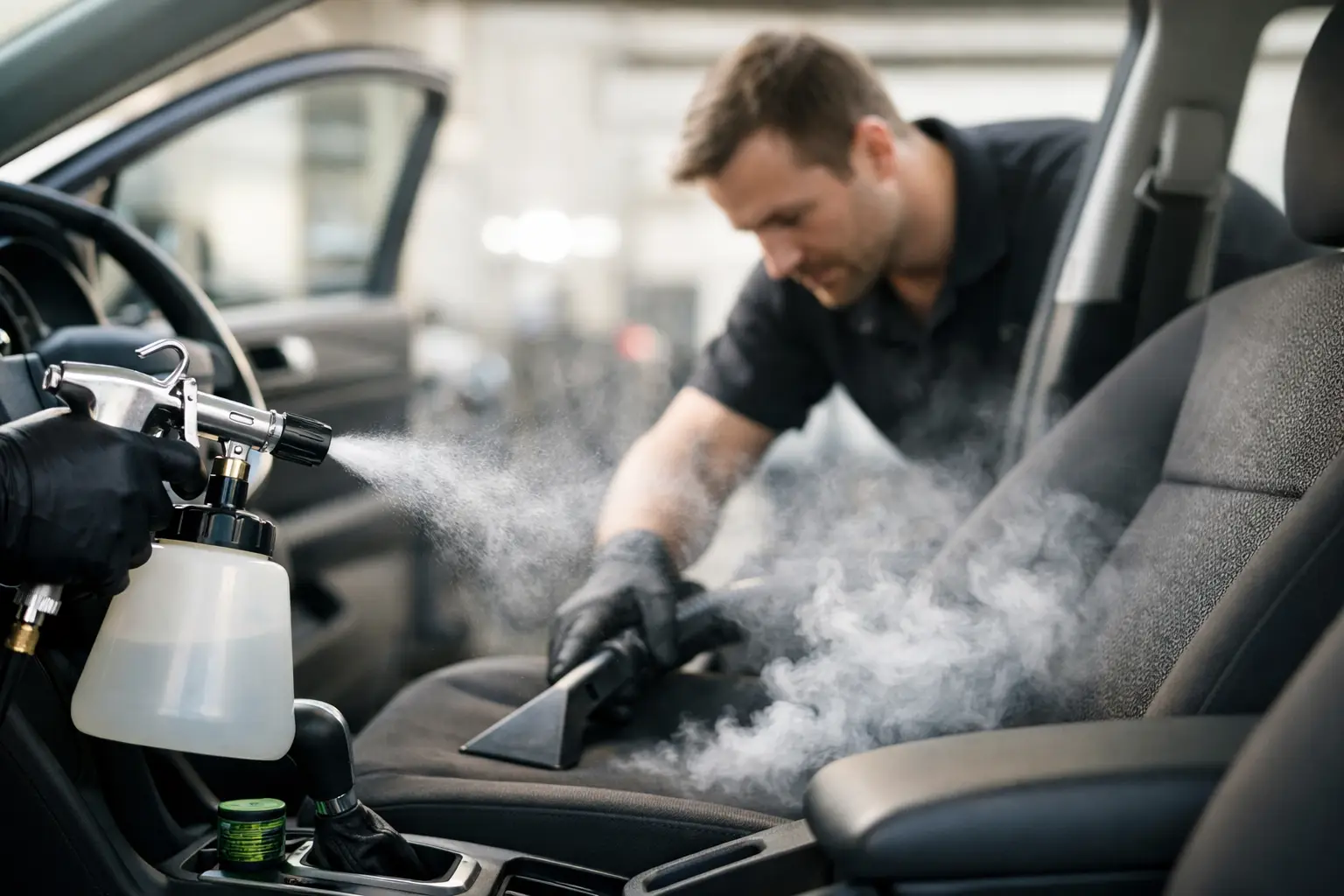
From there, the work usually involves a deep interior reset. Dry debris gets removed first. Then the affected materials are cleaned with the right method for the surface. Carpets and cloth seats may need shampoo and extraction. Leather and plastics need thorough cleaning because odor residue sits there too. Steam can help in tight areas. Vents need attention because smells move through the air system and settle there.
After the cleaning side is handled, deodorizing treatment can do its job better. This is where many low-effort services start instead of finish. That is backwards. If the grime, residue, and spill material are still in the car, deodorizing only goes so far.
What results to expect from odor removal
Honest answer: it depends on the source, the age of the problem, and how deep it went.
Fresh odors usually respond better than old ones. A recent spill is easier to deal with than a six-month-old sour milk stain that soaked into carpet padding in July. Light pet odor is different from repeated accidents. A car that smells stale from normal use is not the same as a smoker's car used daily for years.
A good service can often make a major improvement. Sometimes it can fully eliminate the odor. Other times the result is partial but still worthwhile, especially when the smell is much less noticeable and the vehicle feels clean again. The key is realistic expectations. If the contamination is severe or the root cause is mechanical or structural, detailing alone may not solve 100 percent of it.
That is not a weak answer. That is the truth.
When mobile service makes the most sense
Odor issues are annoying enough without giving up half your day at a shop. For busy drivers in Philadelphia and South Jersey, mobile service makes sense because the work comes to your home or office. No waiting room, no arranging rides, no shuffle to pick the car up later.
That convenience only matters if the work is still done right. A mobile detailer should bring the water, power, tools, and process needed to do real interior work on-site. Otherwise it is just a fancy name for a quick cleanup. The advantage is not cutting corners. The advantage is getting professional results without the shop hassle.
For odor jobs, this is especially useful before a sale, after a road trip disaster, after pet transport, or when the family car has reached the point where air fresheners are losing badly.
How pricing usually works for a car odor removal service
There is no honest flat rate that fits every odor problem. Condition drives labor. Simple.
A vehicle with light odor and a generally clean interior may only need a deep interior detail plus targeted treatment. A heavily soiled SUV with stains, pet hair packed into the carpet, and strong odor in multiple zones is a bigger job. Add smoke or mildew, and the labor can climb fast.
That is why transparent starting prices matter more than fake low numbers. Cheap quotes often leave out the hard part, then pile on charges later or rush the job so the smell returns. A better approach is straightforward: here is the starting point, here is what changes the price, and here is what kind of result is realistic for your vehicle.
If a car is packed with trash, bio mess, old spills, or severe neglect, expect that to affect cost. Trash cars cost more. Simple.
How to know if a provider is selling results or just fragrance
Look at how they talk about the process. If the pitch is mostly about deodorizer, scent bombs, or making the car smell fresh, that is a warning sign. Real odor removal starts with cleaning and source removal, not perfume.
Also pay attention to how they handle expectations. Good providers ask questions about the smell, the cause, how long it has been there, and whether there are leaks or repeated accidents. They do not promise miracles in one sentence. They explain what can be improved and what may require deeper repair beyond detailing.
That kind of blunt honesty is worth more than a polished sales pitch. At DetailCraft, that is how we approach this work. Customers do better when they know what they are paying for and what the vehicle condition actually allows.
When to book odor work instead of waiting
Odors get harder to remove the longer they sit. Heat makes them worse. Moisture makes them worse. Daily use keeps pressing contamination deeper into the interior. If the smell is noticeable now, waiting rarely helps.
The best time to handle it is early, before the source spreads or sets in further. That goes for spills, pet accidents, mildew smells, and smoke contamination. The faster the interior gets properly cleaned and treated, the better the odds of a strong result.
If your car smells bad every time you open the door, you do not need another air freshener. You need the source dealt with by someone willing to do the dirty part of the job, not just the easy part.